The best time to book ice floating in Rovaniemi
Ice floating near Rovaniemi needs a frozen lake, and that narrows the calendar to a few months each winter. Each stretch of that window feels different, from the near-dark of December to the glare of March. Below, how to choose your weeks and how far ahead to book.
When the lake is frozen
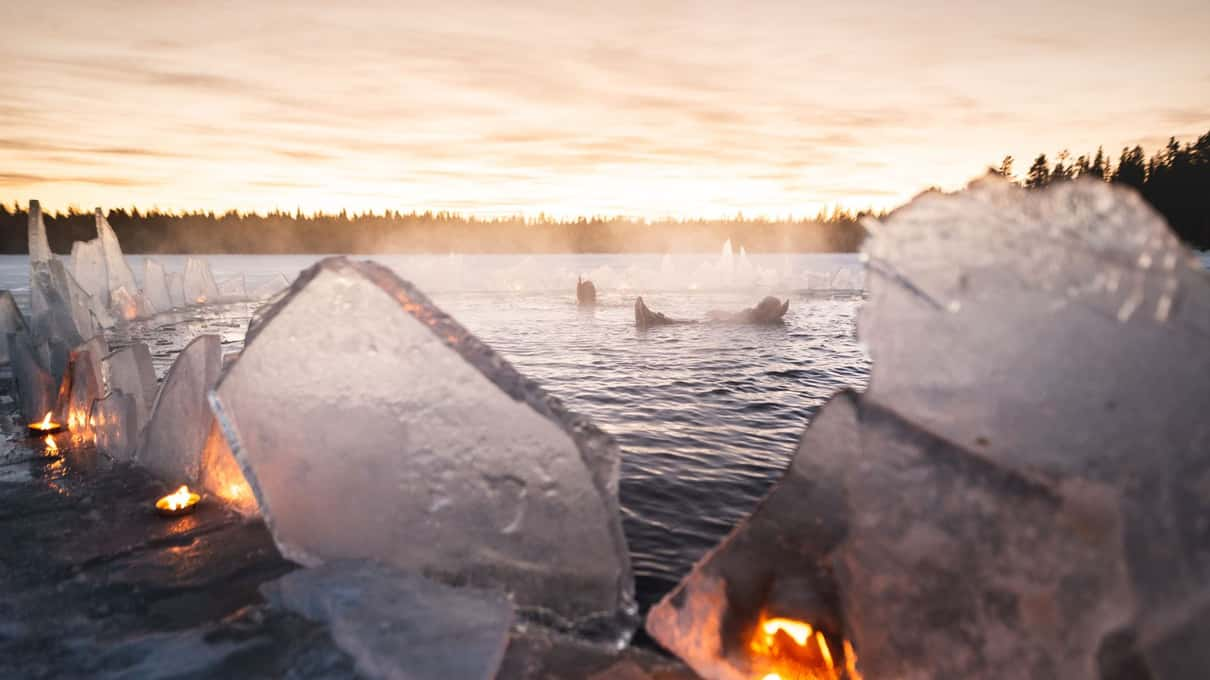
The frozen-lake season around Rovaniemi runs roughly from December to March. In those months the forest lakes carry thick ice, and the operators cut a hole for floating in the middle.
The daytime ice floating trip from ~$133, our top pick, runs through that whole window. Of the two lake trips, it has the most reviews across both booking sites.
Within those months, the right weeks depend on what you want around the float. The daylight changes from week to week, and so do the cold and the crowds.
October and November, before the ice settles
Nordic Adventures keeps floating in late autumn, yet its listing makes no promise of lake ice or snow before December. You may float in a lake with thin or patchy ice and bare ground around it.
The suit works the same either way, so the experience in the water changes little. What you lose is the white landscape most people picture when they book.
Those weeks do bring dark evenings, so the night float already has a chance of the aurora. Our guide to the aurora odds explains why the clear nights matter more than the date.
December, the darkest weeks
Rovaniemi sits just below the Arctic Circle, and around the winter solstice the sun barely rises. You get a few hours of soft pink and blue light around midday, and dark the rest of the time.
That short glow suits the daytime float well, since the low sun colors the snow for hours. If the booking page offers a choice of start times, pick the one closest to midday for light on the forest.
December also brings the Christmas rush to Rovaniemi. Hotels fill and tours sell out, so this is the month to book furthest ahead.
The coldest weeks bring the firmest ice
These are the coldest weeks and the most reliable for ice. Air temperatures in Rovaniemi often sit between -10 and -25 °C (14 to -13 °F), while the lake water under the ice stays around 1 °C (34 °F).
Inside the suit you stay dry, but the cold reaches your hands and face. Plan your layers with our list of what to wear under the suit.
January is also when the sea ice firms up for the icebreakers. The Polar Explorer says its ice is not guaranteed until early January, which makes these two months the safest for an icebreaker day on the Bothnian Bay.
A daylight float on solid ice
The daytime trip runs from December to March, and the price covers hotel pickup plus hot drinks in a cottage afterwards. In the darker weeks, a start close to midday gives the most light on the snow.
Longer days and glare in March
By March the days grow long quickly, and the snow is bright under a higher sun. Sunglasses become part of the kit, and both icebreaker listings mention the springtime glare.
The aurora is still possible in March, since the nights stay dark enough until roughly early April. Milder air makes the evening float easier to bear.
Late in the month, check how the ice is holding with the operator before you lock in a trip. Spring thaw is gradual, but no listing promises a last date.
The winter at a glance
| Weeks | Lake ice | Daylight | Aurora |
|---|---|---|---|
| October to November | not guaranteed | shrinking fast | possible on clear nights |
| December | forming, usually solid | a few hours around midday | possible on clear nights |
| January to February | the most reliable | growing again | possible on clear nights |
| March | solid, check late in the month | long, bright days | possible until about early April |
Day or night, and where the float fits
In December the daytime float catches the only light of the day, while the night float has long hours of darkness. In March the balance tips toward daylight, and the dark window shrinks.
If you want both views, the two Nordic Adventures tours use the same lake. Our daytime or aurora comparison helps you choose one, or decide to do both.
Whichever weeks you pick, put the float near the start of your trip. Lapland weather changes from one day to the next, and an early booking leaves room to move it if a storm or a deep cold snap rolls in.
The same goes for the night float and the aurora. A cloudy first evening is easy to shrug off when there are three or four more to come.
Keep the icebreaker day on its own date. The Sampo pickup for the morning cruise comes before 6:20 am, and the afternoon cruise brings you back in the evening, so neither leaves room for a lake float the same day.
Our three-day Rovaniemi plan shows one way to order the trips. It also leaves a day for the town and the Arctic Circle line.
How far ahead to book
On Viator, travelers book the daytime float about 53 days in advance on average. For December and the school holidays, that means booking often weeks ahead, not days.
All four trips offer free cancellation up to 24 hours before, and GetYourGuide lets you reserve now and pay later. That makes an early booking low-risk if your plans are still moving.
Check the price differences before you commit, since the icebreakers cost several times a lake float. Our ice floating prices page compares all four.