Inside the float suit on a frozen lake near Rovaniemi
A Rovaniemi ice float is easier than it looks and colder in the places you might not expect. This page follows a three-hour lake session from the hotel pickup to the hot drinks, with what reviewers report about the cold water and the photos.
Pickup and the drive out
The daytime float with Nordic Adventures at ~$133 starts with a pickup at your hotel in Rovaniemi. Viator's listing also gives a meeting point at the Rovaniemi Tourist Information on Koskikatu 12.
Expect roughly 45 minutes on the road to the lake, going by one reviewer. The ride is part of the three hours, so the time on the ice is shorter than the total.
Pickup times depend on the date and your hotel, so check your confirmation. If you travel in October or November, read when the lake freezes first, since an autumn float may not come with a frozen lake.
The safety briefing and the suit
At the lake, the guide starts with a safety briefing on the suit and on getting in and out of the hole. Listen closely, since you will follow these instructions in the water.
Then you put on the thermal rescue floating suit over your own clothes, with the guide's help. It is a waterproof, insulated immersion suit, the kind made for people who end up in cold water, so it keeps you dry and floating.
Wear thin warm layers underneath with wool socks. Jewelry and bulky jackets come off before the suit goes on, and our guide to dressing for the float lists the rest.
Into the hole, step by step
- You walk across the ice to the hole cut in it, moving slowly in the bulky suit
- You slide off the edge into the water while the guide stands by
- The suit keeps you buoyant, so you tip onto your back without effort
- You lie still and look up at the sky while you float
You do not swim, and you do not get wet. The listing says knowing how to swim helps you feel at ease but is not a must, since the suit keeps you up.
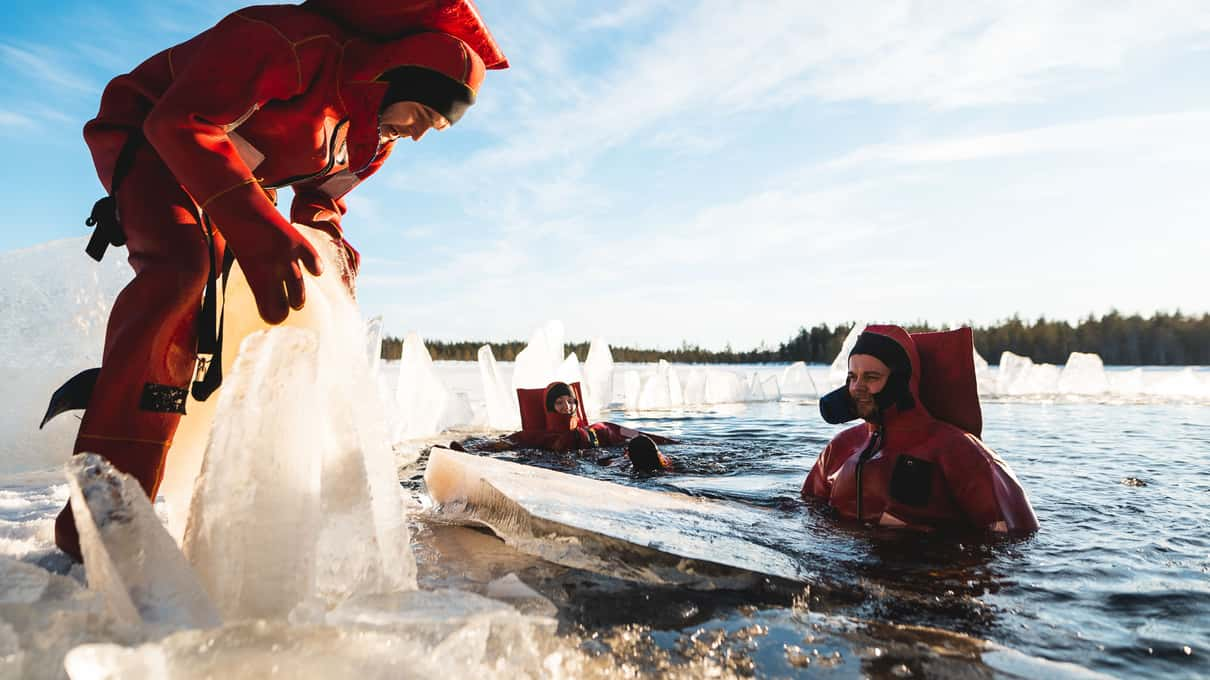
The first moments are the strangest part. You feel the cold through the suit, yet your body stays dry, and lying still on the water soon feels steadier than it looked from the edge.
How cold is the water?
One reviewer put the water at about 1 °C (34 °F), which is what you would expect under lake ice. The air above can be far colder in midwinter.
Rovaniemi in January is often between -10 and -25 °C (14 to -13 °F). Your face is the one part of you outside the suit, so the cold air on your cheeks is often the sharper feeling.
Hands and feet are the usual complaint. They cool first, and on floats like this one a suit can be damp inside or leak at the feet, so pack a spare pair of socks.
Time in the water is flexible. One reviewer floated for about 45 minutes, and you can climb out sooner if your fingers start to ache.
Three hours on a frozen forest lake
Our pick for a first float. Nordic Adventures collects you from your hotel, helps you into the suit and serves hot drinks and cookies in a cottage once you are out.
Photos and video
Your phone stays on the ice. The guides take photos or video of you in the hole, and that is how most floaters get their pictures of the day.
Before you get in, find out when the pictures and video will be sent. One reviewer waited days for a promised video, and you may have left Lapland by then.
The icebreakers handle this differently, with photo packages sold on board. Our page on what ice floating costs lists that extra with the rest.
Warming up afterwards
Back on the ice, you get out of the suit with the guide's help, and the group heads for a cozy cottage. Hot drinks and cookies are part of the price on the daytime trip.
On the aurora float at ~$138, the warm-up happens by a campfire and in a heated cabin, along with hot berry juice or glögi. Our page on daytime or night floats compares the two hours of the day.
Small habits that make it easier
- Use the toilet before you put on the suit, since getting out of it takes time
- Pack spare wool socks and gloves for the drive back
- Leave big bags at the hotel, since the listing does not allow them
- Eat a proper meal beforehand, as cold air burns energy and only cookies come afterwards
These are habits from experience, not rules from the operator. The suit and the guide take care of the float itself, and your part is to arrive warm and fed.
Who finds it hard
The float asks little of your body, but Nordic Adventures sets firm rules. The minimum age is 14, and your height must fall between 150 and 210 cm (4 ft 11 in to 6 ft 11 in), with a weight limit of 110 kg (242 lb). Guests also need normal health and the ability to follow safety instructions.
It is not for pregnant women or people with back problems, and the night trip excludes people with heart problems. Alcohol before the float is not allowed either.
See the full limits for the details. If your group includes younger children, read our lake-versus-icebreaker guide for the trips that take them.